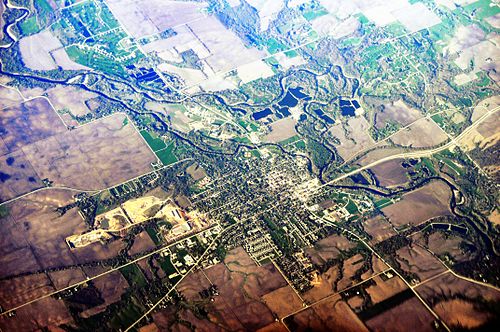
Ames IA
Staybridge Suites Ames by IHG
R$1,501 / night

Destination
Explore Ames! Whether it's the American destination in Iowa/Oklahoma or the beautiful regions of France and Spain. Plan your trip with Aeriva.
Ames · Brasil
Photos
Discover the landscapes and culture of Ames


Editorial guide with history, culture, and practical tips to plan your trip.
When discussing Ames, the first and most important consideration for the traveler is that this name has an extraordinarily vast geographical reach. It is not a single destination, but rather a common name adopted by various population centers spread across continents, each with its distinctive characteristics and unique tourist experiences. Mentioning "Ames" therefore requires the traveler to define which of the multiple locations interests them, as we are talking about destinations with completely distinct cultural, historical, and geographical roots.
Sources map the plurality of this name in at least six different contexts. First, we have Ames, a municipality located in Pas-de-Calais department, France, evoking the charm of northern French culture. Another important center is Ames (Galicia), nestled in the province of A Coruña, Spain, where Celtic influences and the Gallic spirit permeate local life. For those seeking experiences in the Americas, the name appears in three US states: Iowa, in the United States, which is generally associated with the heartland of the American Midwest; Oklahoma, also in the US, representing a vast territory with rich colonization history; and Texas, a state known for its cultural diversity and epic landscapes. Besides municipalities, the name "Ames" also designates Ames Lake region, located in Washington State, whose attractions are focused on natural beauty and water sports.
It is crucial to understand that this multiplicity is not a geographical error, but rather a characteristic of the nomenclature itself. Each "Ames" offers a universe of experiences; be it the bucolic tranquility of the American Midwest, the Mediterranean touch and slow pace of Spanish Galicia, or the historical influences of northern France. The challenge for the traveler is to dive into the specific identity that each of these locations carries.
The history associated with the name Ames reflects the complexity of migratory routes and settlement cycles across different parts of the globe. There is no single historical narrative, but rather a mosaic of accounts covering centuries of community development. The journey behind the nuclei named Ames is fascinating, as it allows us to observe how the same name can be adopted by communities in cultural contexts as divergent as Europe and the vast American territories.
In the case of Ames (France), the history is intrinsically linked to the development patterns of the Pas-de-Calais department, a region with deep roots in northern Hispanic culture. Its origins are intertwined with the trade and agricultural networks that shaped northern France over the centuries.
In Spanish Galicia (Ames), the history is deeply marked by the Celtic spirit and the connection to the Cantabrian Sea. This area has been a point of passage and cultural resistance, preserving unique traditions dating back to pre-Roman occupation—elements that enrich its historical past.
The American locations, such as Ames (Iowa), Ames (Oklahoma), and Ames (Texas), tell distinct chapters of transatlantic settlement history. Iowa, for example, carries the memory of agricultural communities that shaped the development of the American Midwest. Oklahoma evokes the eras of great migrations and open territories, while Texas represents a past marked by pioneering strength and cultural diversity from immigrants. The specific case of Ames Lake in Washington is also linked to the historical use and management of these natural resources by native populations and subsequent colonists.
Therefore, traveling to any "Ames" means taking a journey through the pages of human history—whether marked by ancient European tradition or American developmental dynamism. The historical analysis of the different Ames centers reveals how resilient and adaptable local culture is, regardless of where it is planted.
The cultural richness of the various "Ames" lies precisely in its ability to absorb external influences while maintaining a strong core identity. Each municipality presents a culturally varied palette, ranging from European festive traditions to the welcoming pace of American agricultural communities.
From a French perspective (Ames - Pas-de-Calais), the culture tends to reflect the characteristics of northern France: a strong connection with robust regional gastronomy and celebrations that keep local popular tradition alive. It is a culture of details, history, and devotion to its geographical roots.
In Ames (Galicia), the dominant cultural element is, without doubt, the Galician spirit. The culture here is marked by a strong sense of community, vibrant folklore music, and cuisine that celebrates seafood and rural tradition. It is a unique fusion of Celtic heritage with an Iberian touch.
The communities in the United States display another layer of culture. Ames (Iowa) tends to reflect Heartland culture, valuing agricultural traditions, community events, and a pace of life more connected to the land. In Oklahoma and Texas, the encounter of cultures is striking: in the case of Texas, there is a noticeable blend of Spanish, Mexican, Anglo-Saxon, and Southern heritage that manifests itself in cuisine and festivities. Ames Lake, for its part, puts the culture of leisure and connection with aquatic ecosystems at the forefront.
In summary, when exploring "Ames," the traveler is prepared for a lesson in cultural anthropology. They can experience everything from French wine glasses and brasserie cuisine to Galician paella, passing through Texas barbecues and American Midwest festivities. Cultural diversity is the greatest attraction of this ambiguous name.
The geographical scale of the locations associated with the name Ames is breathtaking. We are talking about a reach that crosses different tectonic plates, climatic zones, and landscapes modeled by rivers, seas, and vast continental plains. Geography not only defines the municipalities; it dictates the pace of life and the economic vocation of the communities.
Geographical data takes us from the European context, such as Ames (France), situated in the Pas-de-Calais department, a region with semi-plains characteristics that facilitate both agricultural development and historical connections via river networks.
In contrast, Ames (Galicia) is geographically positioned in the province of A Coruña, an area that offers dramatic landscapes and constant proximity to Atlantic ecosystems, influencing its topography and way of life.
In the United States, diversification is even more noticeable. Ames (Iowa) is located in the vast heartland of the Midwest plains, characterized by predominantly flat and fertile terrain, ideal for large-scale agricultural monoculture. Oklahoma is situated in an ecological transition region that historically saw the development of great steppes and complex river systems.
The state of Texas presents a monumental geography, varying from arid plains to damper coastal areas. And to complete the natural diversity, we find Ames Lake in Washington, a lacustrine environment that is part of a mountainous and temperate geography, where water resources are central to regional life.
This vast geographical distribution makes "Ames" a case study in how the same name can be synonymous with radically different ecosystems: European agricultural plains; Galician Atlantic coasts; the vast and fertile Midwest plains of the US; and the temperate lacustrine environments of the Pacific Northwest.
Given the dispersion of "Ames" across different geographical hemispheres, it is impossible to draw a single climate profile. Instead, we must address the climatic spectrum that suits its various locations, suggesting a variety of climatic experiences throughout the year.
Ames in Pas-de-Calais (France) tends to be influenced by a temperate oceanic or maritime climate. This means temperature variations tend to be milder and less extreme, with mild winters and pleasant summers, typical of regions near the Atlantic.
Ames (Galicia), located on the Spanish Atlantic coast, shares many of these maritime temperate characteristics. The climate is known for being humid, which guarantees lush vegetation and constant green landscapes, but also requires preparation for humidity variations throughout the year.
Moving to the United States, we find significant contrasts. Ames (Iowa), located in the Midwest, typically experiences a temperate continental climate. This translates into marked climate variation: rigorous and cold winters with significant snow, and hot and humid summers, ideal for grain cultivation.
The Texas setting is another climatic pole. Due to its vast extent and diversity of sub-regions, it can vary between semi-arid, Mediterranean (in certain areas), or subtropical. The Texas climate requires attention, as heat can be intense during the warmer months.
Finally, Ames Lake in Washington operates under a typical temperate Pacific Northwest oceanic climate. This region is famous for its mild and rainy winters and dry, sunny summers, ideal for outdoor activities utilizing the lacustrine system.
In synthesis, the climatic experience of "Ames" ranges from Atlantic temperate (France/Galicia) to extreme continental (Iowa), passing through subtropical semi-arid and Pacific maritime climate (Washington). It is a lesson in comparative meteorology!
The tourist potential in Ames is extremely diverse, as each location explores its own natural and cultural resources. There is no single focus; instead, there are multiple experience niches for the traveler who ventures through this common nomenclature.
In the European context—whether in France or Spanish Galicia—tourism tends to be cultural and gastronomic. Visits can focus on exploring the historical architecture of the cities, the vineyards surrounding the urban areas, and the authentic culinary experience, whether from northern France or the Galician coast.
On the large American plains, tourism adopts a bias more focused on nature and community activities. In Ames (Iowa), tourists are attracted by rural events, country culture, and the charm of life in the countryside. In Texas, besides historical cities, there is an intense attraction to ranching landscapes, live music, and exploring arid biodiversity.
When the focus shifts to Ames Lake (Washington), the tourist activity is predominantly directed towards water sports and ecotourism. Stand-up paddleboarding, boat trips, and hiking in lacustrine environments are the flagship experiences of this region.
The beauty of the "Ames" destination lies precisely in its ability to cater to different profiles: the connoisseur of European art and history; the enthusiast of natural coastal adventure; or the traveler seeking the welcoming pace of vast American agricultural landscapes. It is an itinerary of discoveries, where every stop requires deep cultural immersion to be fully appreciated.
The biggest curiosity about Ames is its ubiquity itself and what this geographical dispersion reveals about the power and persistence of names in different cultures. It is a fascinating phenomenon of toponymy, showing how sound can travel across linguistic and continental boundaries.
The fact that "Ames" appears both in the French department of Pas-de-Calais and the Galician province of A Coruña in Spain underscores a possible historical route or cultural link connecting northern France with western Iberia, although the exact cause remains a fascinating mystery to historians.
In the US scope, the presence of the name Ames in Iowa (Midwest) and Oklahoma and Texas (South/Southwest) shows patterns of population settlement. These locations received successive waves of immigrants who brought not only new professions but also familiar names, consolidating communities with roots in distant places.
Another curiosity is the contrast between the urban and natural identity of the name: there is an Ames referring to a historic municipality (as in France), and another that designates a region of pure natural resource, such as the specific case of Ames Lake in Washington state. This duality shows that "Ames" can be both a human home and a portal to wild nature.
Traveling in search of "Ames" is, therefore, participating in an exercise of geographical and linguistic discovery. It is understanding how the same sound can echo through such diverse regions—from the green fields of Galicia to the grains of Iowa; from the Texas plains to the crystalline blue of Washington. This multiplicity gives Ames a unique charm: it is not just a place, but a collection of multiple worlds ready to be explored.
Everything you need to know to plan your trip
Reference figures to help plan your trip
Attractions
9
Selected stays available to book
208 travelers searched Ames this week
Stays for these dates are among the most sought-after in Ames
Ames IA
R$1,501 / night

Ames IA
R$910 / night

Ames IA
R$714 / night

Ames IA
R$632 / night

Ames IA
R$544 / night

Ames IA
R$1,545 / night

Ames IA
R$1,086 / night

Ames IA
R$903 / night
Must-sees, local secrets, experiences, and hotels — filter layers and tap the pins.
Everything you need to know to plan your trip
Get notified when hotel prices in Ames drop. No spam.
We use your email only to send this price alert. Unsubscribe anytime.
Extend your trip to incredible destinations nearby
Still unsure? See side-by-side comparisons to decide.
We personalize every moment of your journey — from iconic landmarks to hidden cultural gems.
Available 24/7 · Personalized consultations · Local expertise
Updated on July 22, 2026 · Methodology · Authors
Sources
Testimonials
Stories from travelers who have already visited. Share your experience — your comment appears in the cards below.
Visiting Ames exceeded all expectations. The energy of the place is contagious!
Valéria Nogueira
Family with teens
We traveled as a family and Ames delighted kids and adults alike. Great hotel and attraction picks.
Zélia Carmo
Traveler from Goiânia
I arrived without a fixed itinerary and Ames surprised me at every corner. So welcoming.
Bruno Carvalho
Couple from Curitiba
Stayed near downtown and walked everywhere. Ames is even better on foot.
Elaine Coutinho
Solo traveler